

Welcome guest, you can login or create an account
Offering Lakh Vatti
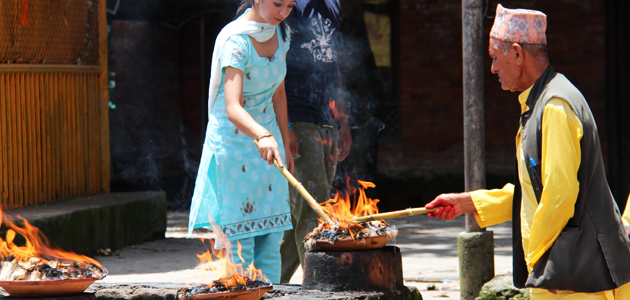
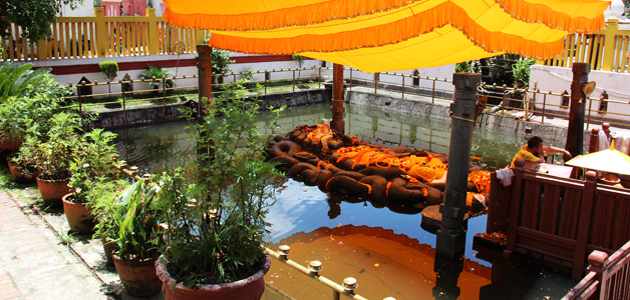

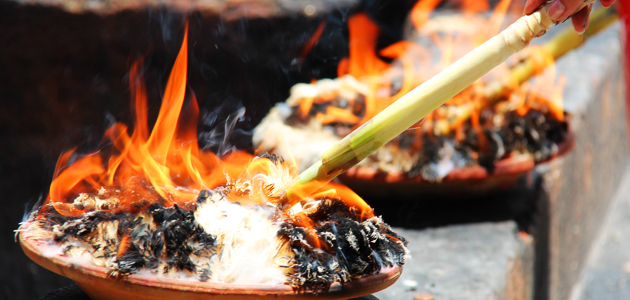
भक्तजनहरु र बजे लाख बत्ति बाल्दै |
Offering Lakh Vatti
Devotees wishing to get their wishes fulfilled by any deity of their choice pledge to light ‘Lakh Vatti’: 125,000 wick lamps. Once the deity fulfills the wishes, the devotees light ‘Lakh Vatti’ at the temple.
Puja sardan: cotton wicks, sesame seeds oil, five-baked clay dishes, one tiny silver dish, one gold wick and another silver wick.
Wicks are soaked in oil, and placed 25,000 wicks in each of the five clay bowl. A silver dish with a silver and a gold wick is placed in the main bowl and decorated them all with vermilion.
The devotee takes the main bowl of wicks to the deity, and lights them, brings it out and places it on the ground facing the deity. Then the remaining four dishes are lighted from the main dish and after circumventing the temple three times, they are placed one each at the four corners of the temple.
Happy Tuesday at Ashokbinayak
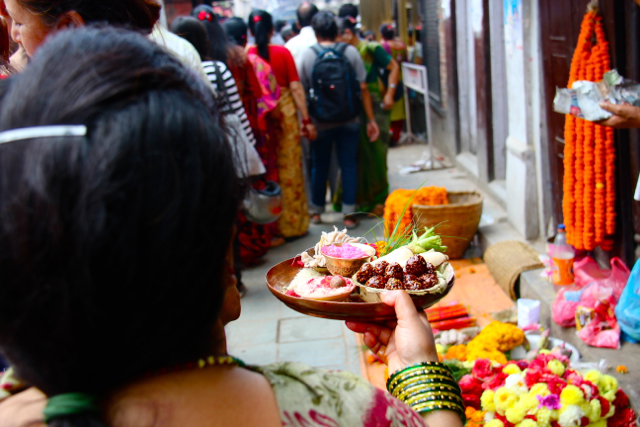
Offerings to Ashokvinayak

Devotees lighting butter lamps at Ashokbinayak
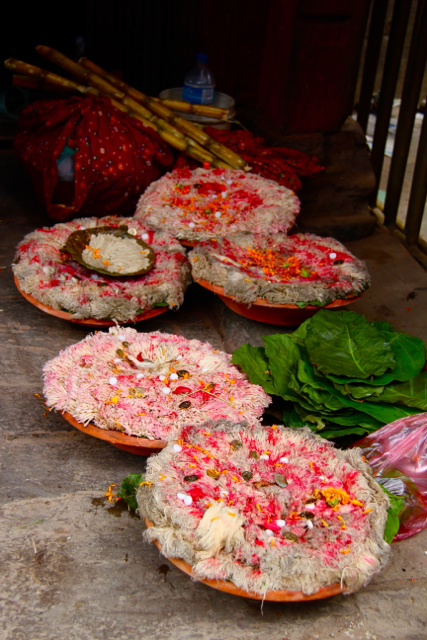
Lakh Batti lighting preparation at Ashokbinayak
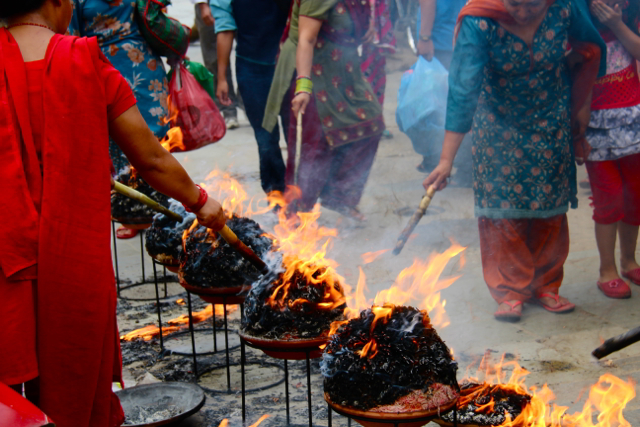
Lighting Lakh Batti at Ashokvinayak
Changunarayan: the deity of meeting wishes, making healthy and prosperous, arbitration means bringing two fighting parties to peace

Changunarayan: the deity of meeting wishes, making healthy and prosperous, arbitration means bringing two fighting parties to peace. Location: Changu, Bhaktapur.
The deity helps
- Devotees in meeting their wishes;
- Devotees in building a healthy and prosperous life;
- Devotees in settling the disputed issues.
Devotees pledge to ‘bhakal’ of making offerings of
- Regular puja comprising holy water, flower, rice, amber or vermillion, and wicks soaked in oil;
- Regular puja plus lighting 108 oil lamps.
- Regular puja plus lakh-vati means lighting 125,000 wick lamps.
- Performing special puja at home or at the temple.
Make offerings on the first day of every month in the Vikram Calendar.
Seto Matsyendranath: the deity of good health

Seto Matsyendranath: the deity of good health. Location: Old Kathmandu city center.
The deity helps
• Devotees to have good health. So, devotees make offerings to the deity for good health other than anything else.
Devotees pledge to ‘bhakal’ of making offerings of
• Regular puja comprising holy water, flower, rice, amber or vermillion, and wicks soaked in oil;
• Lighting 108 oil lamps.
• Lakh-vati means lighting 125,000 wick lamps.
Devotees make the offerings on the first day of every month. However, any day is good for the deity.
Another Seto Matsyendranath is at Nala: About 20 km east of Kathmandu. Devotees make offerings to the deity for good health. The offerings are identical to the offerings made to the deity in Seto Matsyendranath Kathmandu.
Ashok Vinayak – Maru Ganesh: the deity of perfection and success
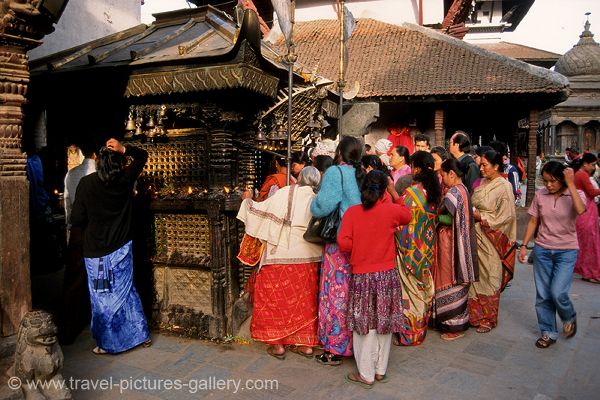
Ashok Vinayak (Maru): the deity of perfection and success. Location: old Kathmandu Center.
The deity helps
• Young businesspersons to starts off new businesses;
• Artisans to initiate new work;
• Students to take examinations.
• People to initiate any business or work.
Devotees pledge to ‘bhakal’ of making offerings of
• Regular puja comprising holy water, flower, rice, amber or vermillion, and wicks soaked in oil;
• Regular puja plus offering of a male goat;
• Regular puja plus offerings of ‘lakh-vati’ lighting of 125,000 wicks soaked in oil.
The days of the deity: Tuesdays and Saturdays but any day is good for making offerings to the deity.
Baglamukhi: the deity of resolving problems of devotees, and matchmaking

Photo:bagalamukhi.com
Baglamukhi: the deity of resolving problems of devotees, and matchmaking. Location: Patan, Lalitpur district.
Goddess Baglamukhi is one of the powerful deities in Nepal.
The deity resolves the problems of
• Devotees;
And helps
• Devotees’ matchmaking.
Devotees pledge to ‘bhakal’ of making offerings of
• Regular puja comprising holy water, flower, rice, amber or vermillion, and wicks soaked in oil, and other items such as a piece of cloth, and peda (sweet) of yellow color, banana and raw coconut;
• Regular puja plus offering of a male goat;
• Regular puja plus offerings of ‘lakh-vati’ lighting of 125,000 wicks soaked in oil.
On Thursdays, most young women make a long line to reach the deity for making offerings.
The day of the Deity is Thursday. However, anybody could make offerings on any day.
Meanings of Offerings – Bhakal

Meanings of Offerings
1) Any offering made to a deity is the symbolic offering of life of a devotee.
2) Nepalis believe that human life is made of five elements such as a) water, b) air, c) earth (source of food), d) light or heat, and e) ether (soul or mind)
3) Regular offering comprises five items such as a) holy water b) flower, c) rice d) tika (vermilion or amber) e) wicks soaked in oil
4) These five items together represent a life. Holy water represents a) water, flower represents b) air, rice represents c) earth, burning wicks represent d) light and heat, and tika represents e) ether,.
5) Anybody adds an egg (chicken or duck depending on a deity) to this regular offering for slightly upgrading the offering depending on the pledge made by a devotee for meeting his/her wishes.
6) An Addition of one life after another such as chicken, duck, goat, sheep, and buffalo to the regular offering goes on depending on the one higher pledge after another made by a devotee for meeting his/her wishes.
7) The highest offering is the offering of five male animals such as a) chicken, b) duck, c) goat, d) sheep, and e) buffalo together. This offering of five animals is called ‘pancha-vali’. This offering goes with the regular offering and an egg. This offering is made in a special case for achieving a special wish of a devotee.
8) Devotees also make offerings of lakh batti, lighting of one hundred thousand (125,000) wicks soaked in oil in addition to the regular offering for achieving a special wish.
9) Regular offering is made to an ear-ailment deity to get relief from the earache or problems.
10) Driving a nail through a coin is the offering to a toothache deity, wasya deyo, to get relief from the toothache.
11) A symbolic life offering is made to a serpent deity to get relief from burning sores. A symbolic cotton serpent is made, and then hung it from the top of a stick, and offered it along with cow milk, grains of buckwheat, tika, and ‘dubo’ (holy grass) to a serpent deity called Naga.
12) An offering called ‘rudri’ is made to Lord Shiva. Devotees need to pay the fees for the size of ‘rudri’ they wanted to perform. The priest performs it at any shrine to Lord Shiva or at the home of a devotee. ‘Rudri’ is offering of five elements called panchamitra (cow milk, ghee, yogurt, honey, holy water).
13) A priest usually performs ‘satya-narayan-puja’ to Lord Vishnu usually at the devotee’s home or at any shrine to Lord Vishnu.
14) Devotees make additional offerings of fruits, sweets and other food items including coins or banknotes.